
ALEXANDER TEchNIQUE
– Freedom of movement & thought –
Interactive Teaching Method
ALEXANDER TECHNIQUE
– Freedom of movement & thought –
Interactive Teaching Method
ALEXANDER TECHNIQUE
Freedom of
movement & thought
Interactive Teaching Method
WOULD YOU LIKE TO Have more FLEXIBILITY AND
FREEDOM OF BODY AND THOUGHT?
WOULD YOU LIKE TO IMPROVE YOUR COORDINATION?
THE Alexander teCHniQUE
is a powerful tool TO ACHIEVE
ALL THIS, AND MUCH MORE!
WOULD YOU LIKE TO IMPROVE YOUR COORDINATION?
Do you simply want to achieve more, with less effort?
THE Alexander teCHniQUE is a powerful tool TO ACHIEVE ALL THIS, AND MUCH MORE!
The Alexander Technique
is named after its discoverer and creator F. Matthias Alexander (1869-1955). It is a principle-based approach to learning about thought and movement, and is a powerful tool for self-improvement.
F.M. started his own journey with the question: ”Would it be fair to say that it is something I am doing that is the cause of my trouble?” and this question is the core of the Alexander technique. The good news here is that if the power and ability to cause problems for ourselves are within us, the power and ability to change is also within ourselves!
We are often told that we need to do something or add something in order to, for example, perform better or have less pain. Instead of adding things in, the Alexander technique is about learning how to stop the unnecessary things that we do. It is about learning to make different choices in how we move and respond and to find more ease and flexibility in body and thought.
In the Interactive Teaching Method, ITM, a lesson always contains an activity. It can be anything from sitting, carrying something, walking, talking or typing, to more specialised performances like dancing, a golf-swing or playing an instrument – anything that interests you. In the lesson we explore the way you move and the way you think about your movement. Your questions and thoughts are the starting point of every lesson, and in addition to talking to you the teacher also uses their hands to help you consider the way you’re moving and thinking.
Using the principles and ideas of the Alexander technique we discover new ways to carry out our daily activities in simpler and more flexible ways, both in body and thought. By exploring how we do everything we do, and how we can use ourselves in a more beneficial way, we can improve our performances in all categories.
”For in the mind of man lies the secret of his ability to resist, to conquer,
and finally to govern all the circumstance of his life”
– F.M. Alexander
”For in the mind of man lies the secret of his ability to resist, to conquer,
and finally to govern all the circumstance of his life”
– F.M. Alexander
The Alexander Technique
is named after its discoverer and creator F. Matthias Alexander (1869-1955). It is a principle-based approach to learning about thought and movement, and is a powerful tool for self-improvement.
F.M. started his own journey with the question: ”Would it be fair to say that it is something I am doing that is the cause of my trouble?” and this question is the core of the Alexander technique. The good news here is that if the power and ability to cause problems for ourselves are within us, the power and ability to change is also within ourselves!
We are often told that we need to do something or add something in order to, for example, perform better or have less pain. Instead of adding things in, the Alexander technique is about learning how to stop the unnecessary things that we do. It is about learning to make different choices in how we move and respond and to find more ease and flexibility in body and thought.
In the Interactive Teaching Method, ITM, a lesson always contains an activity. It can be anything from sitting, carrying something, walking, talking or typing, to more specialised performances like dancing, a golf-swing or playing an instrument – anything that interests you. In the lesson we explore the way you move and the way you think about your movement. Your questions and thoughts are the starting point of every lesson, and in addition to talking to you the teacher also uses their hands to help you consider the way you’re moving and thinking.
Using the principles and ideas of the Alexander technique we discover new ways to carry out our daily activities in simpler and more flexible ways, both in body and thought. By exploring how we do everything we do, and how we can use ourselves in a more beneficial way, we can improve our performances in all categories.
”For in the mind of man lies the secret of his ability to resist, to conquer, and finally to govern all the circumstance of his life”
– F.M. Alexander
Workshops & Lesson Opportunities
Every
THURSDAY
Group lessons and individual lessons
Baldersgatan, Stockholm
Email jenny.lierud@gmail.com and
WEEKEND WORKSHOP STOCKHOLM
November 6-8
together with Tobias Bennsten
Baldersgatan, Stockholm
Email jenny.lierud@gmail.com
for more information or go to
WEEKEND WORKSHOP STOCKHOLM
September 11-13
together with Tobias Bennsten
Baldersgatan, Stockholm
SUMMER COURSE
5 days of exploring the work
July 13-17
Stensunds folkhögskola, Sweden
Weekend Workshop
MOVE WITH MORE EASE
June 26-28
Tallinn, Estonia
The Official ITM Summer Workshops
-
Cork, Ireland
-
Höchst im Odenwald, Germany
-
Cirencester, U.K.
Workshops & Lesson Opportunities
THURSDAYS
Group lessons and individual lessons
Baldersgatan, Stockholm
WEEKEND WORKSHOP STOCKHOLM
November 6-8
together with Tobias Bennsten
Baldersgatan, Stockholm
Email jenny.lierud@gmail.com
for more information or go to
WEEKEND WORKSHOP STOCKHOLM
September 11-13
together with Tobias Bennsten
Baldersgatan, Stockholm
SUMMER COURSE
5 days of exploring the work
July 13-17
Stensunds folkhögskola, Sweden
Weekend Workshop
MOVE WITH MORE EASE
June 26-28
Tallinn, Estonia
The Official ITM Summer Workshops
-
Cork, Ireland
-
Höchst im Odenwald, Germany
-
Cirencester, U.K.
Jenny Lierud
is a certified teacher of the Interactive Teaching Method of the Alexander Technique. She got her certification in June 2025, after 4 years of studies and travels to Bristol, U.K.
Jenny teaches Alexander technique in Stockholm on Thurdays. She has a studio at Baldersgatan, very close to T-Tekniska Högskolan. She’s also open to other days and solutions and she’s happy to travel!
Please get in touch if you want to know more or to book a lesson! Jenny teaches in English as well as in Swedish, depending on the participants.
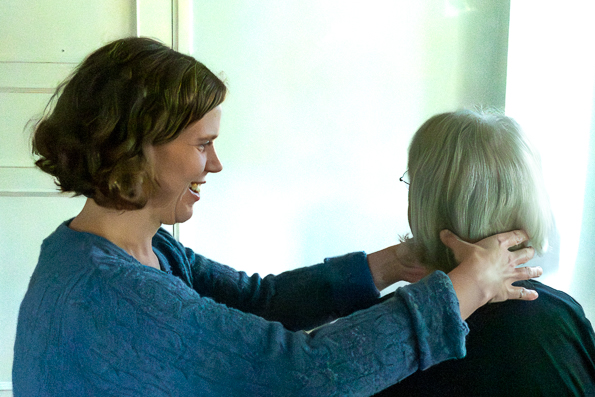
Jenny Lierud
is a certified teacher of the Interactive Teaching Method of the Alexander Technique. She got her certification in June 2025, after 4 years of studies and travels to Bristol, U.K.
Jenny teaches Alexander technique in Stockholm on Thurdays. She has a studio at Baldersgatan, very close to T-Tekniska Högskolan. She’s also open to other days and solutions and she’s happy to travel!
Please get in touch if you want to know more or to book a lesson! Jenny teaches in English as well as in Swedish, depending on the participants.
"What you think, is what you get"
– Don Weed (1950-2022), founder of the ITM-approach of the work of av F.M. Alexander
"What you think, is what you get"
– Don Weed (1950-2022), founder of the ITM-approach of the work of av F.M. Alexander
"What you think, is what you get"
– Don Weed (1950-2022), founder of the ITM-approach of the work of av F.M. Alexander
ITM – the Interactive Teaching Method
is one of many approaches of the Alexander technique. It’s a principle based method with focus on reasoning and thinking in activity. It was founded in 1993 by Don Weed, and is based on an intensive study of the concepts of Frederick Matthias Alexander, whose personal focus was the search for the means of helping every single person to realise his or her full potential. It combines Alexander’s ideas with cutting-edge educational processes and modern medical discoveries to create a powerful tool for personal growth and self-development.
Read more about the ITM: ITM’s official website
There’s also a lot more to read about me and the technique in Swedish under “Alexanderteknik” in the menu.
ITM – the Interactive Teaching Method
is one of many approaches of the Alexander technique. It’s a principle based method with focus on reasoning and thinking in activity. It was founded in 1993 by Don Weed, and is based on an intensive study of the concepts of Frederick Matthias Alexander, whose personal focus was the search for the means of helping every single person to realise his or her full potential. It combines Alexander’s ideas with cutting-edge educational processes and modern medical discoveries to create a powerful tool for personal growth and self-development.
Read more about the ITM: ITM’s official website
There’s also a lot more to read about me and the technique in Swedish under “Alexanderteknik” in the menu.
Most posts are in both Swedish and English, just click and scroll

